
How to Negotiate With a Contractor (Without Losing a Good One)
Compare like for like, adjust the scope, offer flexible timing and ask for value instead of a lower number. Eight fair ways to get a better contractor price.
Published Oct 27, 2026. 2 min read.
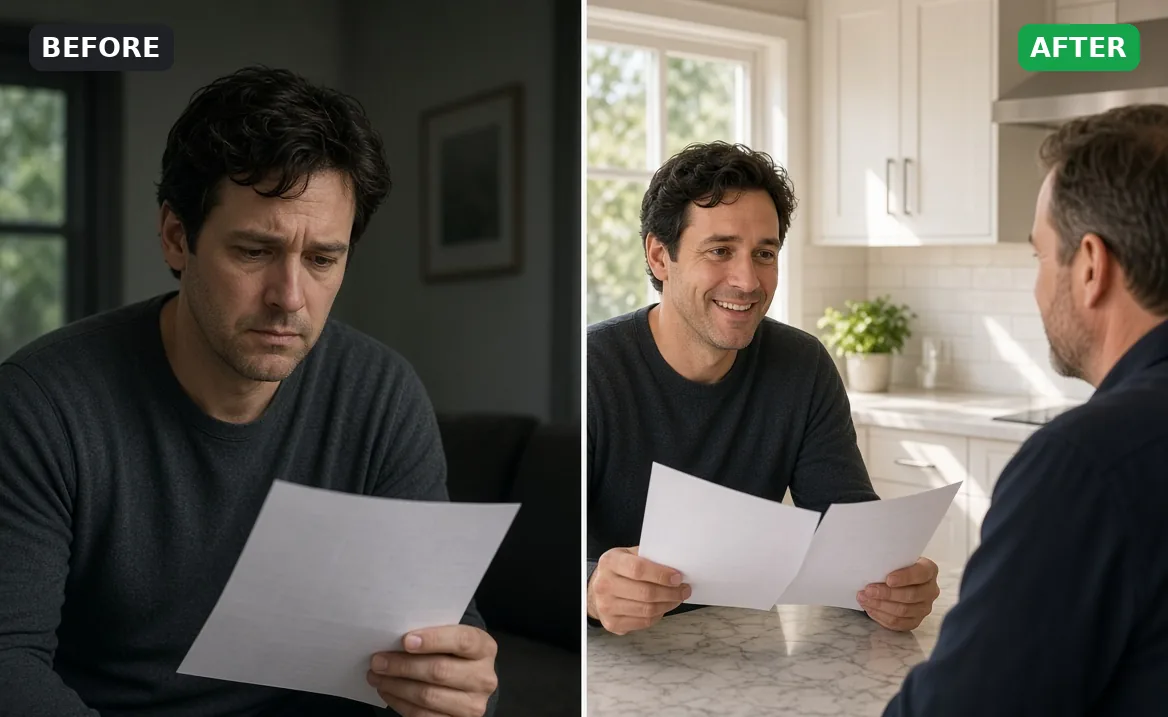
Good contractors are busy, and squeezing them hard can push them away — or lead to corners being cut. The best negotiation lowers the price by changing what you buy or how it's done, not by demanding a discount.
1. Compare like for like first
Line up every quote item by item. Often the "expensive" quote includes things the cheap one leaves out. Our quote comparison adds the cost of missing items so you see the real difference.
2. Ask what drives the price
"Which parts of this cost the most?" Then ask whether there is a less expensive way to get a similar result.
3. Adjust the scope
Keep fixtures where they are, choose a mid-range material, or split the project into phases.
4. Supply some items yourself — carefully
You might buy light fixtures or a vanity yourself, but ask how it affects the warranty and schedule.
5. Be flexible on timing
Off-season work (winter exterior work in mild climates, summer for some interior trades) can come with a better price.
6. Ask for value, not just a lower number
An upgraded underlayment, a longer workmanship warranty or included cleanup can be worth more than a small discount.
7. Use competing quotes honestly
"Another contractor quoted $X for the same scope — is there any flexibility?" works when the scopes truly match.
8. Offer a clean, simple job
Clear decisions, quick payments on schedule and easy access to the house make your job attractive to a busy contractor.
What not to do
- Don't offer cash "off the books" — you lose protection and records.
- Don't push for skipping permits.
- Don't pay more up front in exchange for a discount.
See a typical price range for your project in our cost estimator before you negotiate, so you know what is reasonable.
Frequently asked questions
Is it rude to negotiate with a contractor?
No, if it is respectful and based on the scope. Asking how to reduce cost is normal; demanding a discount on the same work often isn't effective.
When is the best time to negotiate?
After you have comparable written quotes and before you sign. Changing terms after work starts usually costs more.
Should I tell contractors I am getting other quotes?
Yes. It is normal, and it encourages a careful, competitive price.
Sources
Prices are national ranges for planning only. Your price depends on your home, your region and the contractor. This guide is general information, not professional, legal or insurance advice.
Related guides
Quote tips
How to read a roofing quote line by line
The total is the least useful number on a roofing quote. Here is what to look for instead.
Oct 22, 2026, 1 min read
Quote tips
How to Compare Contractor Quotes (Without Getting Fooled by the Total)
The lowest total isn't always the cheapest job. A simple five-step way to compare contractor quotes fairly.
Oct 25, 2026, 2 min read
Hiring contractors
How Many Contractor Quotes Should You Get?
Three written quotes is a good rule of thumb. Here is why, and when one or two can be enough.
Oct 25, 2026, 1 min read